
RERA Karnataka – A Complete Buyer’s Guide

The Karnataka real estate market, especially Bangalore, continues to expand rapidly in 2026. With rising infrastructure growth, IT-driven migration, and increasing luxury housing demand, property investments have reached new highs. However, despite this growth, buyers still face risks such as project delays, unclear documentation, and misleading promises. This is exactly where RERA Karnataka plays a crucial role.
The Karnataka RERA Act has significantly transformed how real estate operates in the state. It has introduced transparency, accountability, and legal protection for buyers, making property transactions far safer. Today, buyers can verify project authenticity, track construction progress, and even file complaints digitally through the RERA Karnataka website.
In recent years, property buyers have become more informed and cautious. They no longer rely solely on developer claims or marketing brochures. Instead, they prefer investing in RERA-approved projects in Bangalore, as these projects offer verified approvals, regulated timelines, and financial accountability. Moreover, with increasing awareness about the RERA Karnataka complaint process, buyers now have stronger legal backing if developers fail to meet commitments.
This guide explains the RERA Karnataka rules, project verification process, builder compliance requirements, and buyer protection mechanisms. Additionally, it simplifies legal concepts and explains how buyers can search for RERA Karnataka projects before investing in any property.
Real Estate in Karnataka Before RERA
Before the implementation of the Karnataka RERA Act, the real estate market operated with limited regulatory oversight. As a result, buyers frequently encountered multiple challenges.
Firstly, project delays were extremely common. Developers often launched projects without proper approvals or financial planning. Consequently, many buyers waited for years beyond promised delivery timelines. In several cases, projects were abandoned mid-construction due to mismanagement of funds or legal disputes.
Secondly, there was significant confusion between carpet area and super built-up area. Builders frequently advertised properties based on super built-up measurements, which included common spaces like corridors, staircases, and amenities. Therefore, buyers often received much smaller usable living spaces than expected.
Another major concern was the diversion of builder funds. Developers frequently used funds collected from one project to finance other projects. This practice resulted in stalled construction and severe financial losses for buyers.
Furthermore, legal remedies available to buyers were slow and complicated. Property disputes often drag on for years in civil courts. Buyers had limited legal power to hold developers accountable, which made dispute resolution extremely challenging.
Real-life cases across Karnataka highlighted these problems. Many buyers invested their lifetime savings into projects that either remained incomplete or faced indefinite delays. These situations created both financial stress and emotional distress for families who were waiting to move into their dream homes.
What Is RERA?
The Real Estate Regulation and Development Act, 2016, commonly known as RERA Karnataka, is a government regulatory framework designed to protect property buyers and standardise real estate practices.
The primary objective of the Karnataka RERA Act is to ensure transparency in real estate transactions. It mandates developers to disclose project approvals, construction timelines, financial details, and layout plans. As a result, buyers can make informed purchasing decisions.
RERA was officially implemented in Karnataka to regulate residential and commercial real estate projects above a specified land or unit threshold. Under the RERA rules, developers must complete mandatory RERA builder registration before launching or marketing any project.
This act covers various property types
The Act covers various property types, including apartments, villa projects, plotted developments, and mixed-use developments. However, certain projects remain exempt from RERA registration. These typically include small land parcels below regulatory limits, redevelopment projects without new sales, and projects that already received completion certificates before RERA implementation.
What Is RERA Karnataka?
RERA refers to the state-level implementation of the Real Estate (Regulation and Development) Act, 2016, tailored to Karnataka’s real estate ecosystem. While the Central Act provides the core legal framework, the Karnataka RERA Rules define how the law is applied, enforced, and monitored within the state.
Formation and implementation timeline
The Central RERA Act came into force in May 2016, and Karnataka notified its state-specific rules soon after. The Karnataka Real Estate Regulatory Authority became fully operational to regulate project registrations, promoter compliance, and buyer grievances. Over the years, RERA has evolved into a digital-first regulator with online project tracking, complaint filing, and public disclosures.
Legal framework under Karnataka RERA Rules
The Karnataka RERA Act framework mandates transparency, financial discipline, and time-bound project delivery. Developers must comply with disclosure norms, escrow rules, and standardised agreements. Any violation attracts penalties, including fines and registration cancellation.
Jurisdiction and cities covered
RERA Karnataka applies across the entire state, including major real estate markets such as Bangalore, Mysuru, Mangaluru, Hubballi–Dharwad, Belagavi, and emerging growth corridors. All qualifying projects within Karnataka fall under its jurisdiction.
Types of projects regulated
RERA Karnataka regulates:
- Residential apartments and villas
- Commercial projects
- Mixed-use developments
- Plotted developments (including gated layouts, if criteria are met)
This inclusion of plotted developments is particularly important in Karnataka, where land investments are popular.
Difference between the Central RERA Act and Karnataka RERA Rules
While the Central Act sets uniform principles, the Karnataka RERA Rules define operational details such as registration fees, procedural timelines, penalties, and formats. Buyers should always rely on state-specific rules for compliance checks and enforcement.
Structure of the RERA Karnataka Authority
The strength of RERA Karnataka lies in its structured regulatory and quasi-judicial setup.
Chairperson and Members
The authority is headed by a Chairperson and supported by whole-time Members appointed by the state government. Together, they oversee project registrations, monitor compliance, and issue regulatory directions.
Role of Adjudicating Officer
The Adjudicating Officer handles compensation-related matters. If a buyer seeks compensation for delays, false commitments, or financial loss, the case is adjudicated here under defined timelines.
Appellate Tribunal
The Karnataka RERA Appellate Tribunal hears appeals against orders passed by the RERA Authority or Adjudicating Officer. Both buyers and developers can approach the tribunal if dissatisfied with an order.
Powers and responsibilities
RERA Karnataka has the power to:
- Register or cancel project and promoter registrations
- Impose penalties and interest
- Order refunds or compensation
- Direct compliance and corrective actions
Time-bound complaint resolution process
One of the biggest advantages of RERA Karnataka is time-bound dispute resolution. Complaints are expected to be resolved within prescribed periods, unlike traditional courts, where cases often run for years.
Mandatory Registration Under RERA Karnataka
Registration is the foundation of RERA compliance. Without registration, a project cannot be legally marketed or sold.
Projects That Must Be Registered
Size criteria
Any real estate project with:
- Land area exceeding 500 sq. meters, or
- More than 8 apartments/units
must be registered under RERA Karnataka.
Ongoing vs new projects
Both new launches and ongoing projects (without completion certificates at the time of RERA implementation) must be registered. This provision brought thousands of delayed projects under regulatory scrutiny.
Promoter Registration Rules
Documents required
Promoters must submit:
- Land ownership and title documents
- Approved plans and sanctions
- Project timelines and specifications
- Financial details and bank accounts
Validity period
Registration remains valid until the declared project completion date. Any extension must be formally approved by RERA Karnataka with a valid justification.
Real Estate Agent Registration
Why agent registration matters for buyers
Only registered agents are legally allowed to sell or market RERA-registered projects. This reduces misinformation and unethical sales practices.
Penalties for unregistered agents
Agents operating without registration face heavy penalties, offering buyers an additional layer of protection.
Key Features of RERA Karnataka
Project Disclosure Requirements
RERA Karnataka mandates extensive public disclosures on the RERA Karnataka website.
Land title clarity
Developers must disclose ownership details, encumbrances, and the legal status of the land. This reduces the risk of title disputes.
Approvals and sanctions
All project approvals—planning, environmental, fire, and local authority sanctions—must be uploaded and accessible to buyers.
Layout plans and specifications
Exact unit sizes, carpet area, floor plans, and amenities must match what is promised. Any change requires buyer consent.
Escrow Account Rule (70%)
How it protects buyers
Promoters must deposit 70% of buyer collections into a dedicated escrow account. These funds can only be used for that specific project.
Misuse prevention
This rule prevents fund diversion, one of the biggest issues in pre-RERA Karnataka real estate.
Standardised Builder–Buyer Agreement
RERA Karnataka enforces a standardised agreement format.
Clauses buyers should check
Buyers should closely review possession dates, penalty clauses for delays, carpet area definitions, and refund terms. Unfair one-sided clauses are no longer permitted.
Quarterly Project Updates
Developers must upload quarterly updates on:
- Construction progress
- Sales status
- Approvals and changes
This allows buyers to track projects in real time through RERA Karnataka project search.
Penalties for Non-Compliance
Fines
Financial penalties can extend up to 10% of the project cost for serious violations.
Registration cancellation
Repeated non-compliance can lead to project deregistration and freezing sales.
Imprisonment provisions
In extreme cases, promoters may face imprisonment, making RERA Karnataka one of the strongest buyer-protection frameworks in India.
Buyer Rights Under RERA Karnataka
One of the strongest outcomes of RERA Karnataka is the clear definition of buyer rights. Earlier, buyers depended heavily on builder promises. Today, the Karnataka RERA Act legally empowers homebuyers at every stage of the purchase journey.
Right to complete information
Buyers have the legal right to access accurate and complete project details. This includes land title status, approvals, layout plans, carpet area, construction timelines, and amenities. All this information must be publicly available on the RERA Karnataka website, eliminating ambiguity and hidden clauses.
Right to timely possession
Under the RERA Karnataka rules, developers are legally bound to deliver projects within the declared timeline. Any unjustified delay is considered a violation. This provision has significantly reduced open-ended delivery promises that were common before RERA.
Right to refund and compensation
If a project is delayed beyond the committed date or deviates materially from approved plans, buyers have the right to withdraw and seek a full refund along with interest. Alternatively, buyers may choose to stay invested and claim compensation for delays.
Right to quality construction
RERA Karnataka mandates structural quality assurance. If buyers discover structural defects or poor workmanship within five years of possession, developers are legally required to rectify them at no additional cost.
Right to file a complaint
Buyers can directly approach the authority through the RERA Karnataka complaint process without going through lengthy civil court procedures. Complaints can be filed online, making grievance redressal faster and more accessible.
Right to interest on delayed possession
If possession is delayed, buyers are entitled to interest for every month of delay, calculated as per rates prescribed under Karnataka RERA rules. This provision ensures financial accountability for developers.
Responsibilities of Homebuyers Under RERA
While RERA Karnataka strengthens buyer rights, it also defines buyer responsibilities to ensure fairness on both sides.
Timely payments
Buyers are required to make payments strictly as per the agreed schedule. Delayed payments may attract interest charges, just as delays by developers do.
Compliance with agreement terms
Buyers must adhere to the terms outlined in the builder–buyer agreement, including usage guidelines, modification restrictions, and possession timelines.
Taking possession responsibly
Once possession is offered in compliance with approvals and completion standards, buyers are expected to take possession without unreasonable delay. Prolonged refusal without valid cause may weaken legal claims.
Role in dispute resolution
Buyers should participate responsibly in dispute resolution processes, provide accurate documentation, and avoid misuse of complaint mechanisms for non-genuine grievances.
RERA Karnataka thus creates a balanced ecosystem where both parties are accountable.
Benefits of RERA Karnataka for Homebuyers
The impact of RERA Karnataka goes far beyond regulation. It has fundamentally reshaped buyer confidence and market discipline.
Transparency and trust
Mandatory disclosures have brought unprecedented transparency. Buyers no longer depend on verbal assurances. Instead, verified data on RERA approved projects in Bangalore builds trust at the decision-making stage.
Legal safety
Clear legal remedies and defined penalties provide strong protection. Buyers now operate within a structured legal framework rather than informal agreements.
Financial protection
The 70% escrow account rule ensures buyer funds are used strictly for project construction. This significantly reduces the risk of stalled or abandoned projects.
Reduced fraud risk
Misleading advertisements, false approvals, and fund diversion have reduced due to strict monitoring and penalties under RERA Karnataka rules.
Confidence for first-time buyers
First-time buyers benefit the most. With easy access to the RERA Karnataka project search and complaint mechanisms, decision-making becomes safer and more informed.
Boost to genuine developers
RERA Karnataka rewards compliant developers by improving buyer trust, enabling faster sales, and creating a level playing field across the market.
How to Check Project Details on the RERA Karnataka Website
Verifying a project on the RERA Karnataka website is one of the most critical steps before investing.
Step 1: Access the official RERA Karnataka portal
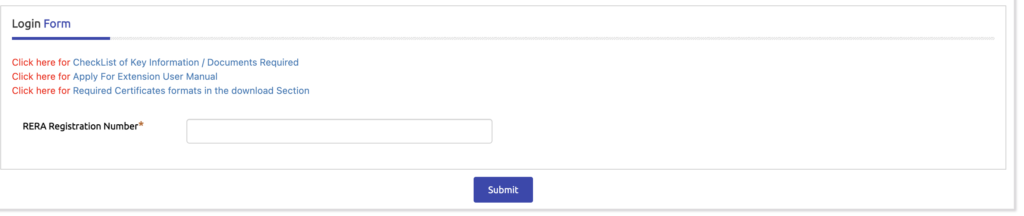
Visit the official Karnataka RERA website and navigate to the “Project Search” section. This portal is publicly accessible and does not require registration.
Step 2: Use the project search options
Buyers can search using:
- Project name
- Promoter name
- Registration number
- District or city
This flexibility allows quick verification even if partial information is available.
Step 3: Apply filters correctly
Filters help narrow results based on project type (residential, commercial, plotted), registration status, and location. This is particularly useful when evaluating multiple RERA-approved projects in Bangalore.
Step 4: Understand project status
Each project page displays its current status—ongoing, completed, delayed, or withdrawn. Buyers should carefully review declared completion timelines and any extensions granted.
Step 5: Review approvals and timelines
Check uploaded approvals such as layout sanctions, commencement certificates, and environmental clearances. Compare these with promised possession dates to assess realism.
Step 6: Track quarterly updates
Scroll through quarterly progress reports to understand construction momentum, sales progress, and compliance history. Consistent updates indicate strong regulatory adherence.
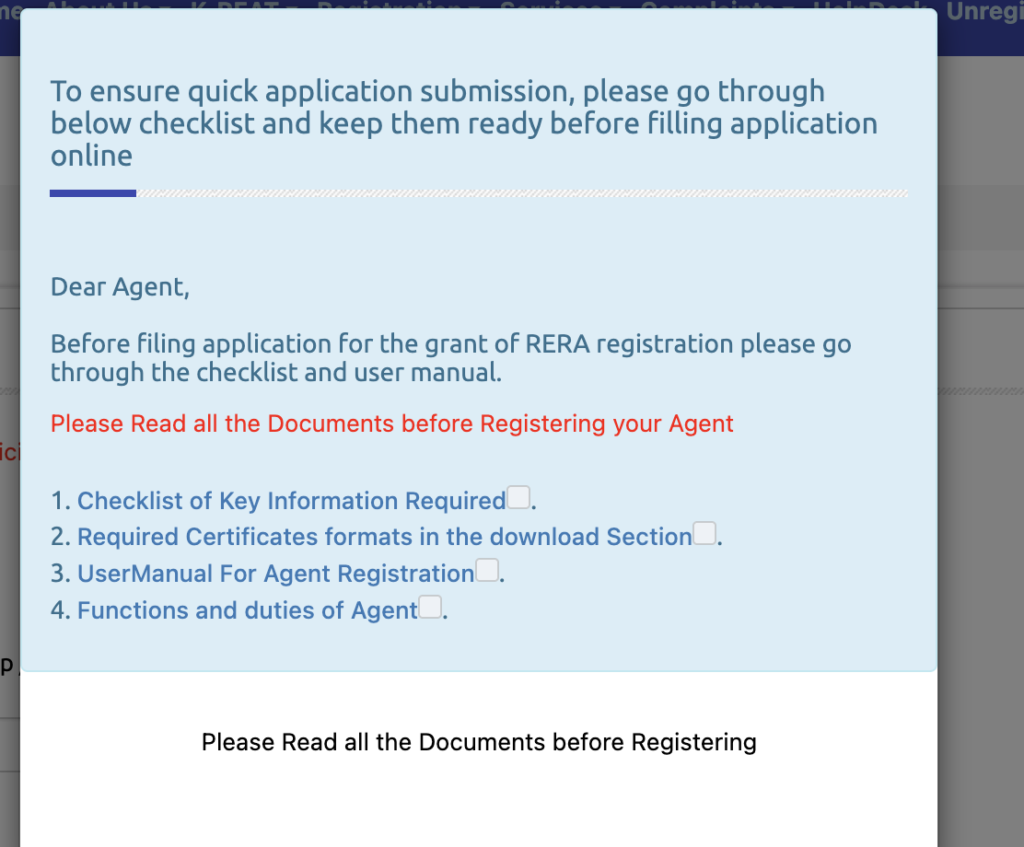
Step 7: Verify promoter and agent registration
Ensure the developer has a valid RERA Karnataka builder registration and that associated agents are registered. This minimises legal and transactional risks.
Common red flags buyers should watch for
- Missing or expired registration numbers
- Frequent project completion extensions
- Incomplete approval uploads
- Inconsistent construction updates
- Multiple complaints against the promoter
Spotting these red flags early can prevent costly investment mistakes.
How to Verify Builder & Agent Credentials Under RERA Karnataka
Even with strong regulations in place, buyer safety ultimately depends on due diligence. RERA Karnataka provides buyers with clear tools to verify both builders and agents before committing financially.
Checking promoter registration
Start by confirming whether the developer has a valid RERA Karnataka builder registration. Every registered promoter is assigned a unique registration number. This number must appear in advertisements, brochures, and booking documents. Buyers should cross-check this number on the RERA Karnataka website to confirm authenticity and validity.
Reviewing past project history
RERA Karnataka allows buyers to view a promoter’s complete project history. This includes completed, ongoing, and delayed projects. By reviewing past delivery timelines and compliance records, buyers can assess whether a builder consistently honours commitments or frequently seeks extensions.
Checking complaint records
The portal also displays complaints filed against a promoter and their resolution status. Multiple unresolved complaints or repeated violations indicate operational or ethical issues. Buyers should treat such patterns as early warning signals.
Agent license verification
Real estate agents must be registered separately under RERA Karnataka. Buyers should verify agent registration numbers before engaging. Registered agents are legally accountable for the information they share, whereas unregistered agents operate outside regulatory oversight.
By verifying both promoters and agents, buyers significantly reduce exposure to misinformation and legal risks.
How to File a Complaint on RERA Karnataka
Despite preventive measures, disputes can still arise. RERA Karnataka offers a streamlined, digital-first complaint resolution process.
Who can file a complaint?
Any homebuyer, allottee, association of buyers, or even agents can file a complaint against a promoter or agent for violations under the Karnataka RERA Act.
Documents required
Buyers should keep the following documents ready:
- Builder–buyer agreement
- Payment receipts and bank statements
- RERA registration details
- Email or written communication records
- Proof of delay or deviation
Well-documented complaints are resolved faster.
Online complaint process
Complaints can be filed directly through the RERA website. Buyers must create a login, fill in complaint details, upload supporting documents, and submit the form electronically. This removes the need for physical visits or legal intermediaries.
Fees involved
A nominal filing fee applies, making the process accessible to individual buyers. The exact amount is defined under Karnataka RERA rules and is significantly lower than court litigation costs.
Expected timelines
RERA Karnataka follows time-bound resolution norms. Most complaints are heard and disposed of within defined statutory timelines, offering faster relief compared to traditional courts.
Appeal process if dissatisfied
If a buyer is dissatisfied with the authority’s order, an appeal can be filed before the Karnataka RERA Appellate Tribunal within the prescribed time. This layered system ensures fairness and accountability.
Common Mistakes Buyers Make Despite RERA (And How to Avoid Them)
Even after RERA’s implementation, buyers sometimes make avoidable mistakes that weaken their legal protection.
Not checking registration status
Some buyers assume RERA registration exists without verification. Always perform a RERA project search before booking.
Blind trust in brochures
Marketing materials often highlight aspirational visuals. Buyers should rely only on details uploaded on the RERA portal, as these are legally binding.
Ignoring agreement clauses
Many buyers fail to read penalty clauses, possession timelines, and refund terms carefully. RERA protects buyers only if agreements align with registered project details.
Booking under unregistered phases
Some developers register only initial phases while selling later phases without approval. Buyers must verify that their specific phase or block is registered.
Relying only on agents
Agents may prioritise commissions over buyer interests. Always independently verify information on the RERA Karnataka website, even if an agent is registered.
Avoiding these mistakes ensures that buyers fully benefit from RERA Karnataka protections.
RERA Karnataka vs Non-RERA Projects: A Clear Comparison
| Aspect | RERA Karnataka Projects | Non-RERA Projects |
| Risk Level | Lower due to regulation and monitoring | High due to lack of oversight |
| Legal Protection | Strong buyer rights under Karnataka RERA Act | Limited and slow remedies |
| Transparency | Mandatory public disclosures | Selective or unclear information |
| Delivery Assurance | Defined timelines with penalties | No enforceable deadlines |
| Buyer Safety | Escrow protection, complaint mechanism | Higher risk of fund diversion |
This comparison clearly shows why buyers increasingly prefer RERA-approved projects in Bangalore and across Karnataka.
Latest Updates & Changes in RERA Karnataka (2025–2026)
The regulatory landscape of real estate in Karnataka continues to evolve as the RERA Karnataka Authority tightens compliance and introduces new buyer-oriented protections. These developments directly impact both buyers and builders, increasing transparency and accountability.
One of the major recent rulings from the Karnataka RERA tribunal mandates that developers must either provide Section 16 insurance or personally cover repair costs for defects such as fire damage. This directive highlights the growing emphasis on financial security for homebuyers, ensuring that insurance coverage is not treated as a formality but a critical safeguard until handover and beyond.
In 2025, KRERA also issued several orders that significantly reshaped the real estate market, from penalising project delays to empowering buyers with stronger enforcement of their rights. These top orders reinforced buyer protections and expanded regulatory oversight across multiple project categories.
Parking allocations — a long-standing point of dispute are now receiving formal attention. The regulator is moving toward requiring builders to disclose exact parking slots, dimensions, type, and location within the sale agreement itself. This addresses frequent conflicts between buyers and promoters over ambiguous or last-minute parking allotments.
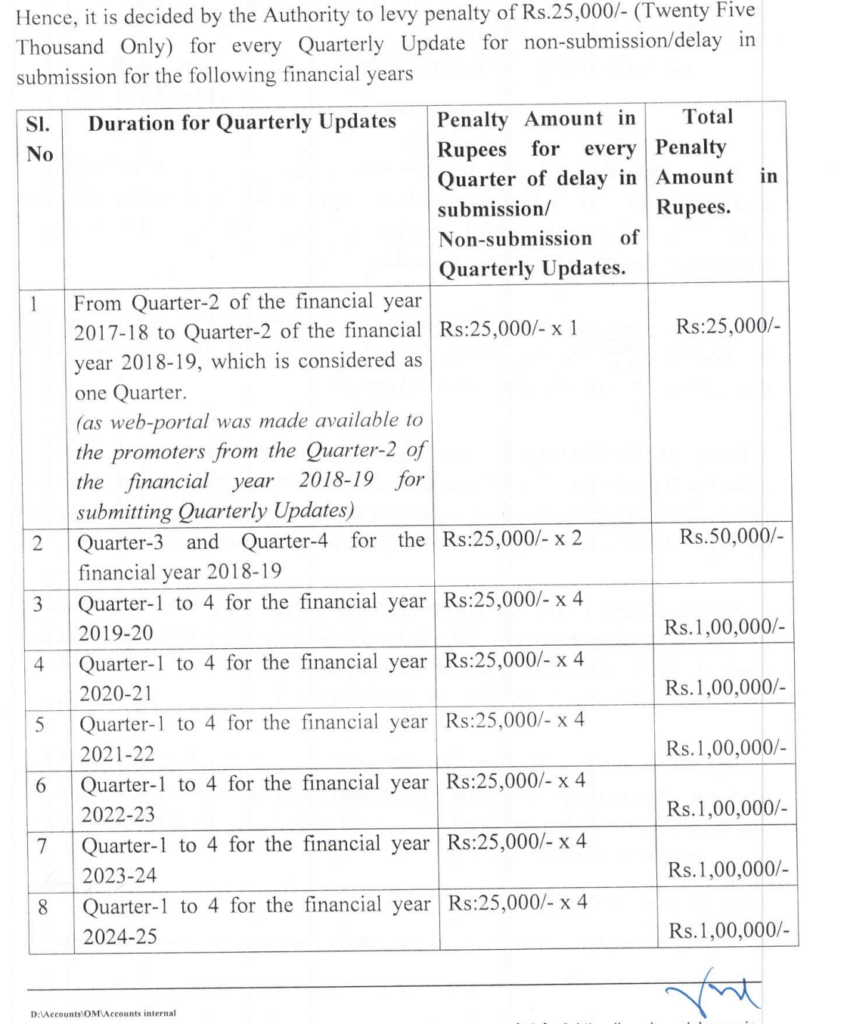
On the compliance front, penalties for delayed or missing quarterly progress report submissions have been reaffirmed for FY 2025-26, with builders facing fines if they fail to file updates. Additionally, KRERA notified penalties for non-submission of annual audited accounts for FY 2024-25, reinforcing financial discipline and ensuring promoter transparency. These penalties are being actively enforced for late filings in 2026.
Another significant development is the introduction of a new project closure policy. Under this framework, KRERA will verify statutory and service-related compliance before a project is formally closed, rather than simply accepting self-declared completion by promoters. This approach, still in early implementation stages, promises greater confidence for buyers that a project declared complete truly meets all regulatory requirements.
Expert Tips Before Buying Property in Karnataka
Even with strong regulations under RERA, informed decisions and careful planning remain essential. Below are expert-recommended checklists and practices to ensure your investment is secure, transparent, and legally protected.
Legal Checklist
- Verify RERA registration: Always perform a RERA project search on the official portal and confirm the promoter registration number.
- Check agreements vs registered details: Ensure the sale agreement matches the registered RERA project specifications, timelines, and terms.
- Approvals and titles: Review land title documents, planning sanctions, OC/CC status, and statutory approvals before signing anything.
Financial Checklist
- Escrow compliance: Confirm that the promoter is depositing homebuyer funds into a RERA-mandated escrow account.
- Audit status: Ensure the promoter has submitted audited accounts for previous financial years — a sign of financial discipline.
- Insurance documentation: Demand copies of RERA-mandated insurance (such as Section 16 coverage) at the time of booking or possession.
RERA Verification Checklist
- Confirm exact parking details are included if required.
- Validate quarterly updates and timelines for construction progress.
- Review past complaints or tribunal orders against the promoter.
- Ensure agent registration status if working through a broker.
Site Visit Best Practices
- Visit in person: Don’t rely solely on brochures — inspect the actual site for visible progress, boundary walls, amenities, and access roads.
- Meet other buyers: Conversations with existing allottees can reveal real progress trends and any unresolved issues.
- Take photographs and notes: Document each site visit to track changes across timelines.
These checklists not only help ensure regulatory compliance but also help protect your investment from common pitfalls, delays, and contractual surprises.
Conclusion: Why RERA Is a Buyer’s Strongest Shield
RERA Karnataka has fundamentally changed how homebuyers approach property purchases in Karnataka. Instead of relying on promises, brochures, or sales pitches, buyers now make decisions backed by verified data, legal clarity, and enforceable rights.
By mandating project registration, public disclosures, escrow protection, and time-bound grievance redressal, RERA Karnataka puts control back in the buyer’s hands. It allows you to verify projects, evaluate builders, track construction progress, and act legally if commitments are not met. This level of transparency was missing before RERA—and its absence caused delays, financial losses, and long legal battles for buyers.
However, RERA works best when buyers actively use it. Checking the RERA Karnataka website, verifying promoter and agent credentials, reviewing approvals, and monitoring quarterly updates should become standard practice before investing any money. These simple steps can prevent years of stress and uncertainty.
In 2026 and beyond, smart homebuyers do not ask only about price or location. They ask whether a project is RERA-registered, compliant, and transparent. When you use RERA Karnataka tools correctly, you reduce risk, protect your investment, and buy with confidence.
Before you book, verify. Before you trust, confirm. Let RERA Karnataka guide every property decision you make.
FAQs
Is RERA mandatory for all projects in Karnataka?
RERA is mandatory for projects above 500 sq. m or more than 8 units, including ongoing projects without completion certificates. Smaller or completed projects may be exempt.
How can I check if a project is RERA approved in Bangalore?
You can verify a project by visiting the official RERA Karnataka website and using the project search option. Check the registration number, approvals, and project status.
What happens if a builder delays possession under RERA Karnataka?
If possession is delayed, buyers are entitled to interest or a full refund with compensation. RERA Karnataka legally enforces these rights.
Can I file a complaint against a builder on the RERA Karnataka website?
Yes, buyers can file complaints online through the RERA Karnataka portal. The process is digital, affordable, and time-bound.
Is RERA applicable to plotted developments in Karnataka?
Yes, plotted developments must be registered under RERA Karnataka if they meet the size or unit criteria. Gated and phased layouts are also covered.
What is the escrow account rule under RERA Karnataka?
Builders must deposit 70% of buyer collections into a dedicated escrow account. This money can be used only for that specific project’s construction.
How long does RERA Karnataka take to resolve buyer complaints?
RERA Karnataka follows time-bound resolution norms and typically resolves complaints faster than civil courts. Timelines vary based on case complexity.