
Real Estate Investment in India 2026: What the Market Is Really Telling You

Real estate investment has always been one of the most trusted ways to build wealth in India. But over the last few years, many investors have been unsure. Prices moved slowly, global uncertainty increased, and people started questioning whether real estate was still worth it. Now, in 2026, things are changing again, but not in a loud or dramatic way. The market is not booming overnight. It is becoming steady, structured, and more predictable. And that’s exactly why real estate investment is coming back into focus for serious investors.
If you look closely at what happened in the first quarter of 2026, you will notice a clear pattern. Investors are not rushing in blindly. They are making calculated decisions. They are choosing the right locations, the right segments, and most importantly, the right timing. That shift is what defines the current real estate market.
A Market That Is Growing, But Not Overheating
One of the most important things to understand about real estate investment in 2026 is that the market is not overheated. In fact, it is doing something much healthier it is growing slowly.
Institutional investments touched around $1.6 billion in Q1 2026, which is the strongest first-quarter performance since 2021. What makes this number more interesting is not just the size, but the source of the investment.
Nearly 76% of the investment came from domestic players. This means Indian investors are now driving the market more than foreign investors.
This shift matters.
When domestic investors lead the market, the growth tends to be more stable. Foreign investments often react quickly to global changes, but domestic capital is usually more patient and long-term focused. That is one of the key reasons why real estate investment today feels more grounded than before. At the same time, office real estate accounted for a major share of these investments. This shows that businesses are expanding again, companies are hiring, and commercial activity is picking up.
And whenever that happens, residential demand naturally follows.
Why Real Estate Investment Is Becoming More Predictable
If you compare today’s market with what it was five or ten years ago, the biggest difference is predictability. Earlier, real estate investment often felt uncertain. Buyers worried about delays, legal issues, and unclear pricing. But today, the ecosystem has improved significantly. Regulations like RERA have made projects more transparent. Developers are more accountable. Buyers now have better clarity on approvals, timelines, and payments.
At the same time, the market has shifted towards more organised developers. Large and reputed builders are leading most of the new launches, especially in major cities. This reduces risk for investors because these developers have a track record to protect. Financing has also become easier. Interest rates are more stable, and banks are more willing to support homebuyers. This improves affordability and increases overall demand.
All these factors together make real estate investment less risky and more structured than before.
Bengaluru: A City That Explains the Entire Market
If you want to understand where real estate investment is working best in India, you only need to look at Bengaluru. The city reflects almost every trend that is shaping the Indian real estate market today.
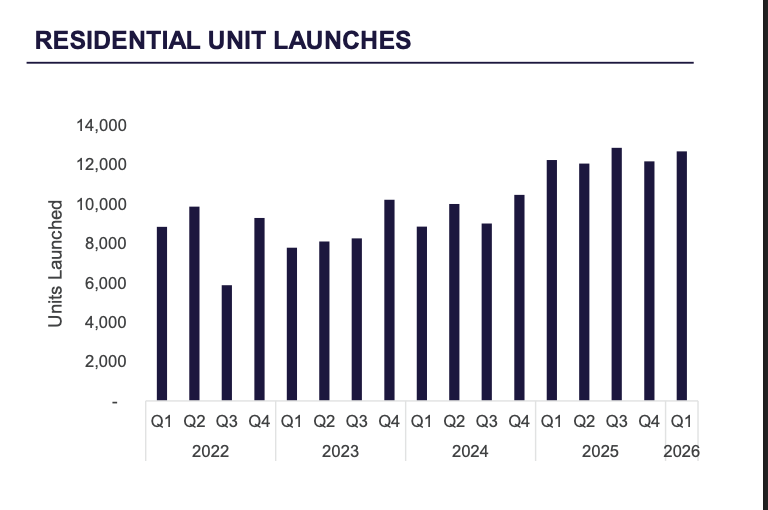
As per a Cushman-Wakefield report, in Q1 2026 alone, Bengaluru saw around 12,664 new residential units being launched, with steady growth compared to previous quarters. This is not a sudden spike. It is a continuation of consistent supply over time. That consistency is important. It shows that developers are confident about demand, and buyers are actively participating in the market.
But what makes Bengaluru even more interesting is where this growth is happening. Most of the new developments are Real estate concentrated in East and North Bengaluru. Areas like Whitefield, Budigere Cross, and Hoskote contributed a major share of launches, while locations such as Devanahalli and Hebbal also saw strong activity.
These are not random locations.
They are backed by strong infrastructure development. Metro expansions, improved road connectivity, proximity to the airport, and the growth of IT and business hubs are all driving demand in these areas. This brings us to one of the most important truths about real estate investment.
Growth does not happen where everything is already built. It happens where development is still in progress.
A Shift Toward Premium and Luxury Housing
Another clear trend in 2026 is the growing dominance of high-end and luxury housing. A large share of new launches in Bengaluru is coming from the premium segment. Affordable housing, on the other hand, has decreased significantly. At first glance, this may seem surprising. But when you look deeper, it makes sense. There are more high-income buyers in the market today. NRIs are investing more in Indian real estate. Many buyers are upgrading their homes instead of buying entry-level properties.
Post-pandemic lifestyle changes have also played a role. People now value space, comfort, and quality of living more than before. This shift is changing the nature of real estate investment. It is no longer just about buying property at the lowest price. It is about buying the right property that holds long-term value.
Steady Price Growth: A Sign of a Healthy Market
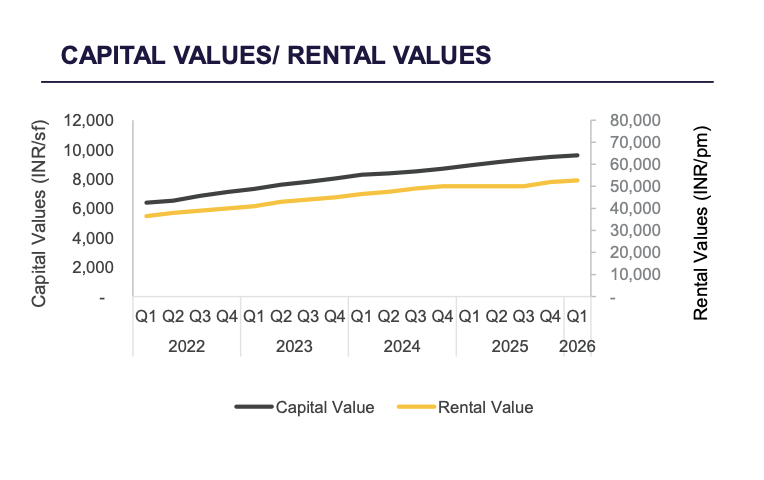
One of the biggest concerns for any investor is price movement. In 2026, property prices are not suddenly shooting up. Instead, they are increasing gradually. Capital values in key markets have grown by around 5–6% annually, while rental values have increased by about 4–5%. This type of growth is considered healthy.
If prices rise too quickly, it creates a bubble. If they do not rise at all, it reduces investor confidence. But steady growth means that demand is real and sustainable. For someone looking at real estate investment, this is actually a good situation. It allows you to enter the market without overpaying, while still benefiting from long-term appreciation.
The Role of Infrastructure in Real Estate Investment in India
If there is one factor that drives real estate investment more than anything else, it is infrastructure. Every successful investment story in real estate has one thing in common—early entry into a developing corridor. In cities like Bengaluru, areas such as Devanahalli, Hoskote, and Sarjapur are gaining attention not because of current demand, but because of future growth.
Projects like the Satellite Town Ring Road (STRR), metro expansions, and upcoming business zones are shaping these areas into future hotspots. Smart investors do not wait for development to be completed. They invest when development is still taking shape. That is where the maximum upside lies.
The Most Important Mistake Investors Make
There is one mistake that most real estate investors make, and it is often ignored. They focus only on buying. In reality, the biggest challenge is not buying a property. It is exciting at the right time.
Many investors:
- Buy at the wrong stage
- Choose locations with weak demand
- Struggle to find buyers when they want to sell
This is why real estate investment should never be just about entry. It should always include a clear exit strategy.
Before you invest, you should ask:
- Will there be demand at this location in 5 years?
- Is resale activity strong here?
- Who will buy this property from me later?
Answering these questions early can make a huge difference in your returns.
Real Estate Investment in India | Where Should You Invest in 2026?
Based on current trends, a few segments stand out in real estate investment. Plotted developments are gaining popularity because they offer flexibility and lower maintenance. They are especially attractive in developing areas where land appreciation can be significant. Apartments in growth corridors continue to be a safe option for those looking for rental income and easier resale. Luxury housing is attracting high-net-worth buyers and NRIs, making it a strong segment in premium locations. Commercial real estate, especially office spaces, is also showing strength due to increasing corporate demand. Each segment has its own advantages, and the right choice depends on your investment goals.
What the Future Looks Like for Real Estate Investment
Looking ahead, the outlook for real estate investment in India remains positive. But it’s important to understand why it looks positive, not just assume it. The market today is being supported by three strong pillars: domestic capital, economic growth, and infrastructure expansion.
Domestic capital is playing a bigger role than ever before. Unlike earlier years, when foreign investment had a strong influence, Indian investors are now driving a large part of the market. This creates stability because domestic investors tend to think long-term. They are not reacting to global shocks as quickly as foreign funds.
At the same time, India’s economic growth continues to support real estate investment. With steady GDP growth, rising incomes, and expanding job opportunities, more people are entering the property market either as buyers or tenants. This naturally increases demand across residential and commercial segments.
Infrastructure is another major factor shaping the future. Metro lines, expressways, industrial corridors, and airport expansions are not just improving connectivity; they are creating entirely new investment zones. Locations that were once considered outskirts are now turning into high-potential growth corridors.
All these changes together are shaping a more mature and resilient real estate market.
Conclusion on Real Estate Investment in India
Real estate investment in 2026 is very different from what it used to be. It is no longer driven by speculation or quick profit expectations. Instead, it is becoming a more thoughtful and strategic process. Investors are taking time to understand the market. They are focusing on location fundamentals, infrastructure growth, and long-term demand. They are also becoming more aware of risks, which helps them make better decisions.
When markets are stable, investors get the opportunity to enter without overpaying. They can identify emerging locations, invest at the right stage, and benefit from gradual appreciation over time. Another key advantage of this phase is reduced competition from speculative buyers. This allows genuine investors to make more rational choices instead of rushing into deals.
However, success in real estate investment still depends on one thing — strategy.
Simply buying a property is not enough. Investors need to think about:
- When to enter
- Where to invest
- How long to hold
- When to exit
Each of these decisions plays a role in determining the final return.
In many cases, investors focus heavily on buying but ignore exit planning. This often leads to challenges later when they want to sell. A good investment is not just one that appreciates, but one that is easy to exit when needed.
That is why the smartest investors today are those who plan their entire journey — from entry to exit — before making a decision.
If approached in the right way, real estate investment continues to be one of the most powerful wealth-building tools in India.
It offers:
- Tangible asset ownership
- Long-term appreciation
- Rental income potential
- Protection against inflation
And now, with better transparency and structured growth, it also offers more confidence than before. The opportunity is not about timing the perfect moment. It is about recognising the phase of the market and acting with clarity. Because in real estate, the biggest returns often come to those who enter early, stay patient, and exit wisely.
FAQs for Real Estate Investment in India
Is real estate investment a good option in India in 2026?
Yes, real estate investment in 2026 is considered strong due to stable price growth, infrastructure development, and increasing demand from both end-users and investors.
Which cities are best for real estate investment in India?
Cities like Bengaluru, Delhi NCR, and Chennai are currently leading due to job growth, infrastructure expansion, and strong rental demand.
What type of property is best for real estate investment?
It depends on your goal. Plots are good for long-term appreciation, apartments are suitable for rental income, and commercial properties offer higher rental yields.
How much return can I expect from real estate investment?
On average, good properties can offer around 5–6% annual price appreciation and 4–5% rental yield, depending on location and demand.
Is it better to invest in plots or apartments?
Plots usually offer higher long-term appreciation, while apartments provide regular rental income and easier resale. The right choice depends on your investment strategy.
What factors should I check before investing in real estate?
You should check location growth, infrastructure plans, legal approvals, developer reputation, pricing trends, and future resale demand before making a decision.
Why is location important in real estate investment?
Location determines demand, price growth, and rental potential. Areas with upcoming infrastructure and job hubs usually offer better returns over time.
How long should I hold a real estate investment?
Real estate works best as a long-term investment. A holding period of 5–10 years usually allows you to benefit from full appreciation cycles.
What is the biggest mistake in real estate investment?
The biggest mistake is focusing only on buying and ignoring exit planning. A good investment should have strong resale demand so you can exit easily when needed.
The point about infrastructure influencing real estate decisions is spot on. With cities like Bengaluru setting the example, investors are now more focused on long-term viability, rather than just short-term price growth. It’s refreshing to see this more calculated approach.