
Investment vs End-Use Plots: Which Is Better for You?
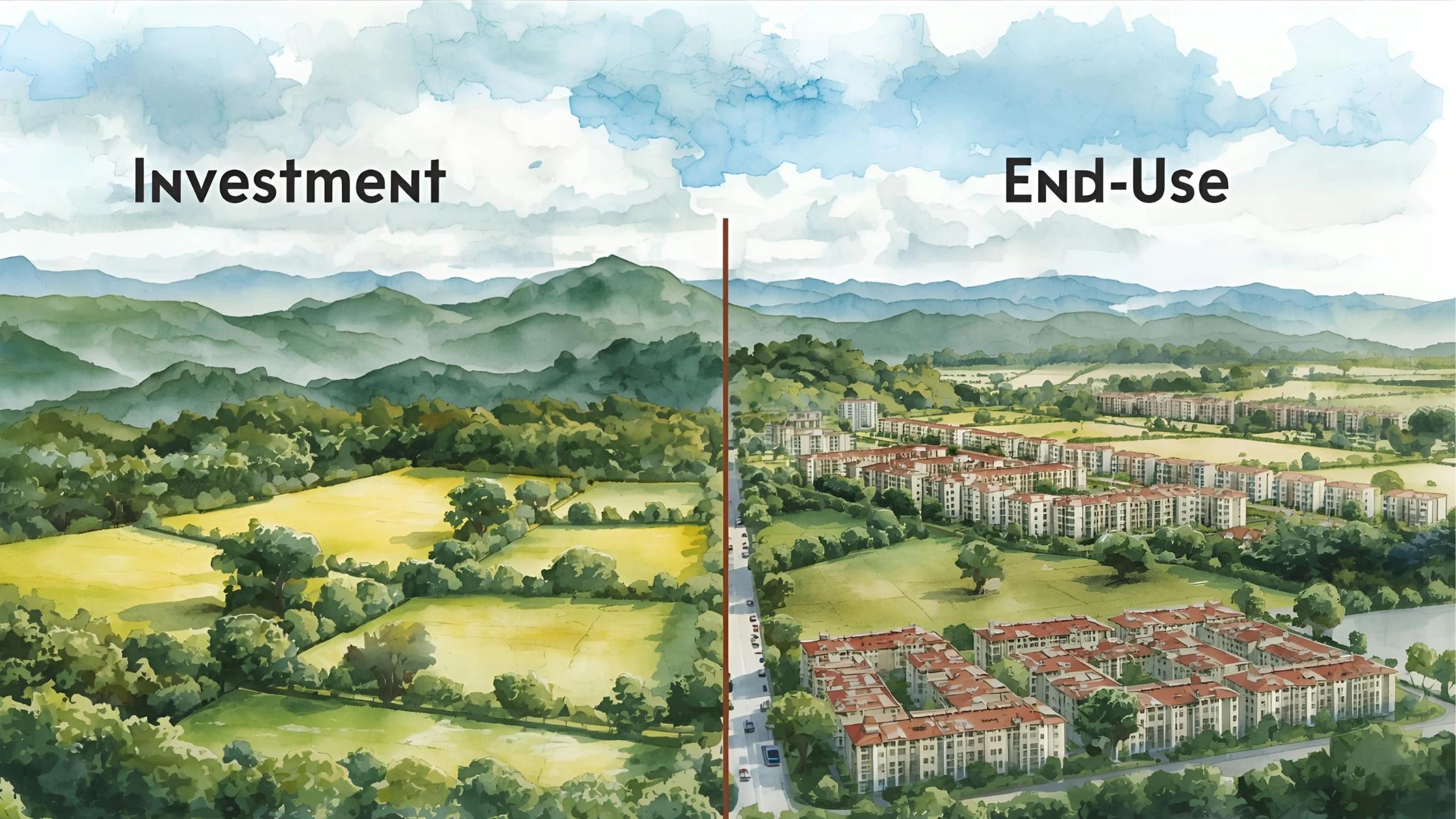
Buying a plot for investment vs end-use depends on your objective. Buying a plot for investment is ideal if your goal is long-term capital appreciation, low maintenance, and flexibility to sell or build later. End-use plots are better if you want to build a home, customise your living space, and save on rent. In simple terms, investment vs end-use comes down to wealth creation versus personal living.
In short:
- Investment plots = long-term returns + appreciation
- End-use plots = home ownership + customisation
What Does “Investment Plot” vs “End-Use Plot” Mean?
An investment plot is purchased mainly for future resale and capital growth over time. Buyers usually hold the land for 5–10+ years and benefit from infrastructure-led appreciation.
An end-use plot is bought to build a home, either immediately or in the near future, with priority given to livability, location convenience, and residential stability.
Key difference: Investment plots are ROI-driven, while end-use plots are lifestyle-driven.
Advantages of Plots as Long-Term Investments
Plots are considered ideal for long-term investment because land appreciates faster than built properties, requires low maintenance, and offers higher flexibility. Moreover, plots in high-growth areas like Devanahalli, Sarjapur Road, and North Bangalore benefit directly from infrastructure development.
High Appreciation Potential
Land is a limited asset. As a result, plots in emerging Bangalore corridors often see steady price growth once roads, metro lines, and commercial hubs develop.
Freedom and Flexibility
Investment plots give you complete control. You can hold the land, sell it when prices peak, or develop it later based on market conditions.
Lower Maintenance (Initially)
Unlike apartments, vacant plots do not involve monthly maintenance charges, association fees, or repair costs during the holding period.
Lower Upfront Cost & Tax Benefits
Plots usually have a lower entry price compared to villas or luxury apartments. Additionally, long-term capital gains on plots can be tax-efficient when reinvested correctly.
Legacy and Portfolio Diversity
Land is often viewed as a legacy asset. Many investors include plots in their portfolio to balance risk and preserve wealth across generations.
Advantages of Plots for End-Use
Buyers prefer end-use plots because they allow complete customisation, long-term residential stability, and freedom to build a home as per personal preferences.
Customization
With an end-use plot, you can design your home layout, elevation, and interiors exactly the way you want—something apartments rarely allow.
Savings on Rent & Emotional Benefits
Building your own home helps you avoid long-term rental expenses. In addition, it offers emotional security and the satisfaction of owning a self-built home.
Potential Rental Income (Mixed Purpose)
Many homeowners use part of their plot for rental floors or future development, allowing them to combine personal living with income generation.
Long-Term Asset Value
Even when used for living, land continues to appreciate over time. Therefore, end-use plots provide both lifestyle comfort and financial growth.
Risks & Drawbacks – Investment vs End-Use of Plotted Development
While plots are considered one of the best long-term real estate investments in Bangalore, they are not completely risk-free. Therefore, understanding the drawbacks of investing in plots is essential before committing capital.
Liquidity and Selling Difficulties
Compared to apartments, plots generally have lower liquidity. Selling a plot may take longer, especially during slow market cycles. Moreover, resale demand depends heavily on location maturity, buyer sentiment, and infrastructure readiness.
No Rental Yield Until Developed
One major drawback of plot investment is the absence of rental income. Unlike apartments that generate monthly rent, plots remain idle assets until construction is completed. As a result, investors relying on regular cash flow may find plots less attractive in the short term.
Market and Location Uncertainty
Plot appreciation is highly location-sensitive. If infrastructure projects are delayed or development slows, price growth may stagnate. Hence, choosing the wrong micro-market can impact returns significantly.
Legal and Encroachment Risks
Plots carry higher legal due diligence requirements. Issues related to land titles, conversion, zoning, and encroachments are common risks in Bangalore’s outskirts. Therefore, buying only RERA-approved and legally vetted plotted developments is critical.
Regulatory Changes
Changes in zoning laws, land-use regulations, or development norms can affect plot value and usage. Staying informed about local planning authorities and master plans is essential for long-term investors.
Holding Costs
Although plots have low maintenance, investors may still incur property tax, fencing, security, and opportunity costs during the holding period, especially if appreciation takes longer than expected.
Challenges of Plots for End-Use
Buying a plot for end-use offers flexibility and customisation, but it also comes with its own set of challenges.
Construction Time and Cost
Building a home involves approvals, contractor coordination, material sourcing, and supervision. Additionally, construction costs may escalate over time due to inflation and labour shortages.
High Immediate Outlay
End-use plots often require a larger upfront financial commitment, especially if construction follows soon after purchase. This includes plot cost, construction expenses, and interior finishing.
Lack of Amenities Initially
Unlike apartments, plotted developments—especially in emerging areas—may lack ready amenities such as clubhouses, security systems, or social infrastructure in the early years.
Opportunity Cost
Funds locked into a self-built home may reduce liquidity and limit the ability to invest elsewhere. Therefore, buyers must evaluate whether emotional returns outweigh financial opportunity costs.
Resale Flexibility
End-use homes are highly personalised. As a result, resale demand may be limited compared to standardised apartments, making exit slightly more complex.
Key Factors to Consider Before Buying a Plot in Bangalore
Location & Infrastructure
Location remains the most critical factor for both investment plots and end-use plots. Areas with strong connectivity, employment hubs, and planned development tend to perform better.
Infrastructure Projects
Upcoming projects such as metro lines, STRR, PRR, highways, and tech parks significantly influence plot appreciation. Always assess project timelines and government commitment.
Legal Clearances
Ensure the plot has a clear title, conversion approvals, RERA registration, and local authority sanctions. Legal clarity directly impacts resale value and peace of mind.
Budget & Financing
Plot loans usually require higher down payments compared to home loans. Therefore, buyers must plan liquidity carefully and account for construction financing if applicable.
Investment Horizon
Plots deliver the best returns over a 5–10+ year horizon. Short-term investors seeking quick exits may face challenges unless the location is already mature.
Risk Appetite
Plots carry a higher risk than ready apartm
ents but also offer higher long-term rewards. Buyers must align decisions with their financial comfort and patience level.
Buyer Profiles: Who Should Choose What?
First-Time Homebuyers
First-time buyers often prioritise end-use plots or ready homes to avoid paying rent and gain residential stability.
NRIs
NRIs typically prefer plot investment in Bangalore for capital appreciation. Long holding periods and favourable long-term capital gains taxation make plots attractive for this segment.
HNIs
High-net-worth individuals usually diversify—owning one end-use luxury home while allocating capital to multiple investment plots for portfolio balance.
Investors
Short-term investors may prefer apartments for rental yield and liquidity. However, many long-term investors are shifting toward plots, anticipating strong appreciation over the next 5–10 years.
Is Buying a Plot in Bangalore Worth It?
Bangalore remains one of the strongest real estate markets in India for plot investment due to infrastructure expansion, job growth, and rising land demand. Peripheral corridors like Devanahalli, Sarjapur, Hebbal, Anekal, and Hoskote are emerging as high-potential zones, offering lower entry prices today and strong appreciation over the next 5–10 years.
Peripheral Growth Driving Plot Demand in Bangalore
Bangalore’s rapid urban expansion has pushed both developers and buyers toward the outskirts. As a result, plotted developments in Bangalore’s peripheral zones are witnessing increased traction.
Growth corridors such as Devanahalli (near Kempegowda International Airport), Sarjapur–Varthur belt, Hebbal–Anekal stretch, and Hoskote are emerging as major hotspots for plotted layouts and villa plots. These areas benefit from larger land parcels, planned developments, and comparatively affordable pricing.
Moreover, infrastructure projects like the Peripheral Ring Road (PRR) and Satellite Town Ring Road (STRR) are significantly improving accessibility, reducing travel time to the city, and accelerating real estate growth in these micro-markets.
Investor Hotspots in 2025
According to recent real estate market trends, investors in 2025 are actively buying plots and villas in emerging Bangalore locations. Areas such as Devanahalli, Hebbal, North Bangalore, and zones along the new ring roads are gaining attention due to their future growth potential.
These locations typically offer lower current land prices compared to core city areas, while promising higher appreciation as infrastructure and commercial activity expand. At the same time, Whitefield and Sarjapur Road in East Bangalore continue to attract buyers, especially tech professionals, for both investment apartments and plotted homes.
Job Market and Rental Demand Impact
Bangalore’s strong employment ecosystem—driven by IT, biotech, aerospace, startups, and global R&D centres—keeps housing demand consistently high. This sustained job growth directly supports rental demand across the city.
Interestingly, peripheral localities now connected by metro lines, highways, and express corridors are emerging as hybrid zones. Buyers are purchasing plots in these areas with plans to build and move in later, while benefiting from lower land costs today and decent rental prospects in the future.
Growing NRI Interest in Bangalore Plots
Bangalore’s global city status and relatively affordable land prices compared to international markets make it a preferred destination for NRI real estate investment. Many NRIs buy plots for long-term appreciation or to build homes when they return to India.
Importantly, there are no special FEMA or FDI restrictions for NRIs purchasing residential plots in Bangalore, apart from standard legal compliance. This simplifies the buying process and adds to investor confidence.
Policy Environment and Buyer Confidence
With the implementation of RERA, digitisation of land records, and improved regulatory oversight, transparency in plotted developments has improved significantly. Buyers today have more confidence compared to the past.
However, land transactions still carry a higher risk than apartments. Therefore, engaging reputable developers, verified mandate partners, and experienced legal experts is essential when buying plots in Bangalore.
Plot as Investment vs Plot as End-Use
| Aspect | Plot as Investment | Plot as End-Use (Personal Use) |
| Primary Goal | Capital appreciation and long-term wealth creation | Build a home or facility for self-occupation |
| Cash Flow | No rental income until construction; returns depend on price appreciation | Living value while occupying replaces the monthly rent |
| Time Horizon | Long term, usually 5–10+ years | Medium to long term; occupancy possible in 1–3 years |
| Risk Profile | Higher risk due to market cycles, legal issues, and lower liquidity | Moderate risk from construction delays and cost overruns |
| Financing Options | Mostly self-funded or land loans; limited institutional support | Home loans available post-construction; phased payments possible |
| Flexibility | High flexibility—can hold, sell, lease, or develop later | High design freedom, but construction must be fully funded |
| Resale Potential | Depends on infrastructure growth; resale may take time | Built homes often resell faster, sometimes at a premium |
| Lifestyle Benefit | None until the plot is developed | Immediate lifestyle benefits and emotional ownership |
| Taxes & Returns | Long-term capital gains tax applies; potential 2–3× growth over a decade | Same capital gains rules; plus savings on rent, add indirect returns |
Which Is Better for You – Investment vs End-Use of Plotted Development
There is no one-size-fits-all answer when choosing between a plot as an investment and a plot for end-use. The right choice depends on your financial goals, time horizon, risk appetite, and life stage. Understanding where you stand on these factors will help you make a confident decision.
Seek Appreciation and Can Wait
If your primary objective is long-term capital appreciation and you can park funds for several years, an investment plot in Bangalore’s fast-growing peripheral areas may offer the highest returns. Locations such as Devanahalli, Sarjapur Road, North Bangalore, and emerging STRR corridors have historically rewarded early investors once infrastructure and connectivity improved.
In fact, investors who bought plots early in areas like Yelahanka and North Bangalore witnessed multi-fold appreciation as roads, metro connectivity, and commercial development arrived. Therefore, if time is on your side, land investment can be a powerful wealth-creation tool.
Need a Home and Stability
On the other hand, if your priority is building a home soon, especially for family living, an end-use plot makes more sense. Choosing a plot closer to your workplace or within a ready or near-ready township ensures daily convenience, social infrastructure, and long-term residential stability.
Additionally, building your own home allows complete customisation while helping you save on rent. Over time, this rental saving becomes an indirect financial return, making end-use plots both an emotional and economic decision.
Hybrid Approach: Investment + End-Use
Many buyers today follow a hybrid real estate strategy. This involves purchasing one plot for personal use and another plot purely for investment in a different growth corridor. This approach helps diversify risk while balancing lifestyle needs and wealth creation.
This strategy is particularly common among HNIs and NRIs, who often split investments between a future residential home and long-term appreciation assets.
Affordability and Risk Balance
With rising prices in prime Bangalore locations, apartments and villas can become expensive. In comparison, plotted developments on the city outskirts often offer larger land parcels at a lower per-square-foot cost.
However, affordability should be balanced with risk. Not all peripheral locations grow at the same pace. Unproven or poorly connected areas may remain stagnant for years. Hence, buyers must evaluate infrastructure timelines, demand drivers, and developer credibility before committing.
Importance of Professional Advice
Given the legal, regulatory, and market complexity involved in land purchases, seeking professional real estate and legal guidance is highly recommended. Experts can help assess a plot’s growth potential, verify approvals, and ensure clean documentation—reducing risk and improving long-term outcomes.
Conclusion for Investment vs End-Use of Plotted Development
Choosing between a plot for long-term investment and a plot for end-use ultimately comes down to your personal objectives and understanding of the Bangalore real estate market. Both options can deliver strong value when aligned with the right purpose and location.
Before you decide, remember to:
- Clearly define your goal (investment returns vs. personal living)
- Research locations thoroughly, including infrastructure plans and price trends
- Verify all legal clearances and approvals
- Assess your financing ability and holding capacity
Whether you choose investment or end-use, Bangalore’s strong growth fundamentals—driven by jobs, infrastructure, and urban expansion—continue to make plots a rewarding long-term asset. For buyers seeking clarity, expert guidance can make the difference between an average purchase and a truly successful one.
If you’re still unsure where to invest or which property fits your purpose, expert advice can make all the difference.
Houzbay is a mandate partner for plotted developments and apartments in Bangalore, with access to one of the largest and most verified portfolios across key growth corridors, helping buyers choose confidently between investment and end-use.
FAQs for Investment vs End-Use – Plotted Development in Bangalore
Are plots a good long-term investment in Bangalore?
Yes. Plots in Bangalore have historically delivered strong long-term returns, particularly in areas such as Devanahalli, Sarjapur Road, Whitefield, and North Bangalore. IT growth, airport expansion, metro connectivity, and ring road projects make plots ideal for a 5–10+ year investment horizon.
What are the risks of buying a plot for investment?
The main risks of plot investment include:
- Legal or title issues
- Slower resale in underdeveloped locations
- No rental income until construction
- Delayed infrastructure growth
These risks can be minimised by choosing RERA-approved layouts, reputed developers, and verified locations.
What should I check before buying a plot in Bangalore?
Before buying a plot, verify:
- Clear title deed and encumbrance certificate
- Land conversion and authority approvals (BDA, BMRDA, or Panchayat)
- RERA registration (if applicable)
- Road access, water, power, and drainage
- Surrounding development and zoning norms
- Developer track record
Which areas are best for plot investment in Bangalore?
Top plot investment hotspots in Bangalore include:
- Devanahalli & Airport Road
- Sarjapur Road & Dommasandra
- Whitefield Extension
- Anekal & Chandapura
- Nelamangala & Tumkur Road
- Hoskote & Old Madras Road
These areas benefit from metro expansion, STRR/PRR connectivity, and strong job-market growth.
Are plots better than apartments for investment in Bangalore?
Plots generally offer higher capital appreciation because land supply is limited. Apartments, however, provide rental income and faster liquidity If your goal is long-term wealth creation, plots often outperform apartments in Bangalore’s growth corridors.
Can NRIs buy plots in Bangalore?
Yes. NRIs can legally buy residential plots in Bangalore without special RBI approval. They cannot buy agricultural land unless permitted by state laws. Most NRIs prefer gated plotted developments for better security and clarity of documentation.
How long should I hold a plot to get good returns?
Ideally, plots should be held for 5–10 years or more. Maximum appreciation usually occurs after major infrastructure projects—such as metro lines, highways, or ring roads—become operational.
Is it cheaper to build a house on a plot than to buy an apartment?
In many cases, yes. Buying a plot and constructing a home can be more cost-effective and offer better space utilisation. However, construction costs, approvals, timelines, and supervision must be planned carefully.
What type of plot has the highest resale value?
Plots with strong resale demand usually have:
- Gated community development
- Wide internal roads and proper planning
- Proximity to IT parks, highways, or metro routes
- RERA approval
- Reputed developer branding
- Upcoming social infrastructure
Which option is better for first-time homebuyers?
If your priority is stability and stopping rent payments, an end-use plot is better. If you already own a home and want to grow wealth, an investment plot may be more suitable.
What documents are required to buy a plot in Bangalore?
Key documents include:
- Mother deed
- Sale deed
- Khata certificate and extract
- Encumbrance certificate
- Latest tax paid receipts
- Approved layout plan
- RERA registration (if applicable)
Does a plot generate rental income?
No. A plot does not generate rental income until construction is completed. Plots are primarily capital appreciation assets, not cash-flow investments.
How do I know if a plot is good for end-use?
A plot is suitable for end-use if it offers:
- Good road and metro connectivity
- Nearby schools, hospitals, and markets
- Reasonable commute time
- Safe neighbourhood and community living
- Reliable water and power supply
If daily life becomes easier—not harder—the plot suits end-use.
Can I buy multiple plots for diversification?
Yes. Many investors buy two or three smaller plots instead of one large plot. This strategy helps diversify risk and capture appreciation across multiple growth zones in Bangalore.
2 thoughts on “Investment vs End-Use Plots: Which Is Better for You?”