
DC Converted Plots | 10 Things Buyers Need to Know
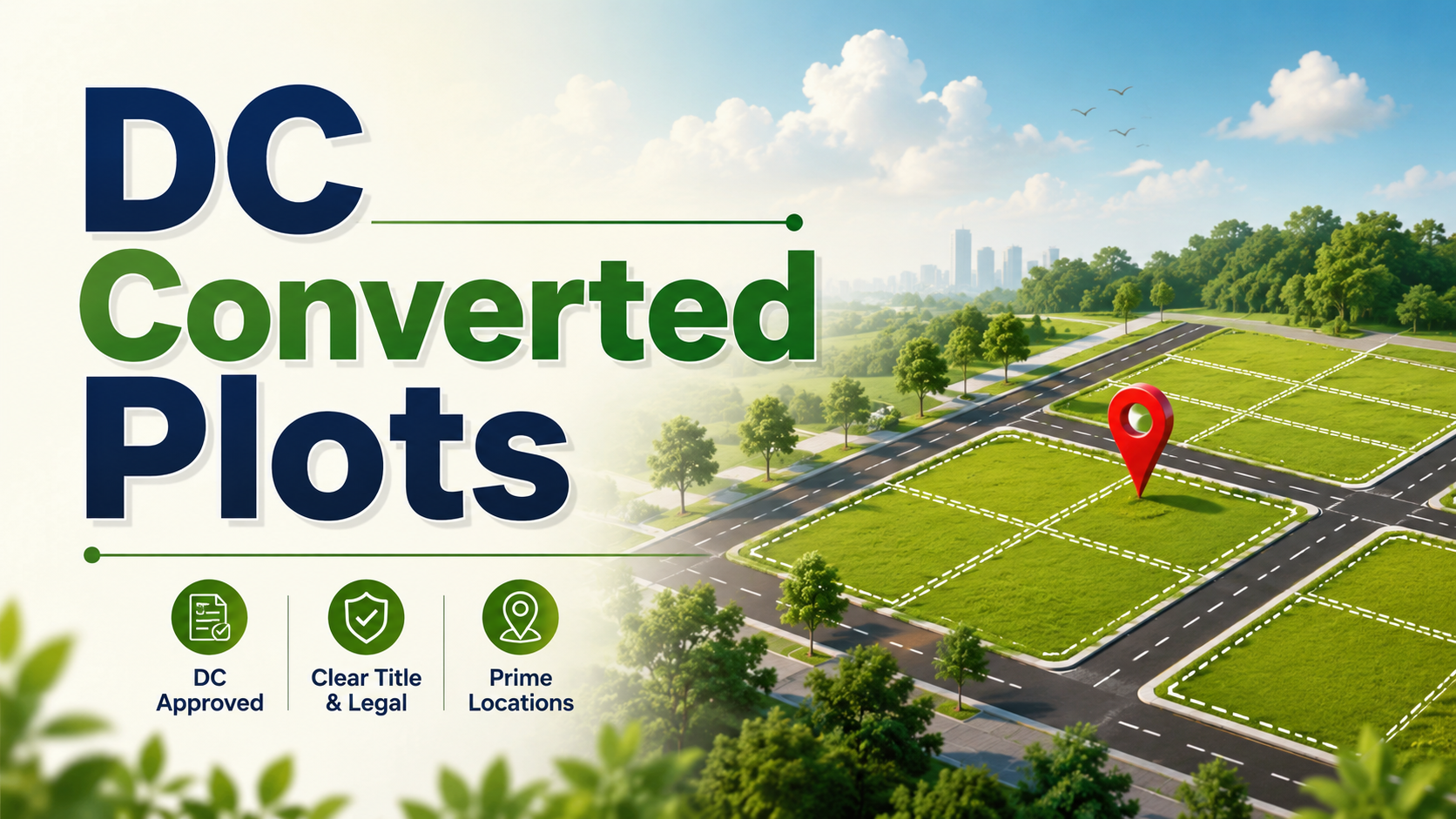
Buying a plot in Bangalore can be one of the smartest long-term investments. However, before you look at location, pricing, or future appreciation, there is one legal aspect you must understand clearly: DC Conversion. Many buyers hear terms such as “DC Converted Plot,” “DC Approved Land,” or “Conversion Certificate” when evaluating plotted developments. Yet, very few fully understand what these terms mean and why they matter.
A plot may look attractive on paper. The location may be growing. The price may seem right. However, if the land lacks the required approvals, it can cause problems later during construction, loan processing, resale, or legal verification. That is why understanding DC Conversion is extremely important for every plot buyer.
In this guide, we will explain the 10 most important things you should know about DC Conversion before buying a plot in Bangalore.
1. Understand What DC Conversion Actually Means
One of the biggest misconceptions among buyers is assuming that all plotted land can automatically be used for residential purposes. That is not true. Most land on the outskirts of Bangalore originally falls under agricultural classification. Under Karnataka land laws, agricultural land cannot simply be converted into residential layouts, villa communities, commercial developments, or apartment projects.
The landowner must first obtain permission from the Deputy Commissioner. This approval process is called DC Conversion. In simple words, DC Conversion is the legal process that changes the status of land from agricultural use to non-agricultural use.
Only after this conversion can the land legally be developed for residential or commercial purposes. Therefore, whenever you hear the term “DC Converted Plot,” it means the land has received permission for non-agricultural use.
2. Why DC Conversion Matters for Plot Buyers
Many buyers focus only on the plot size, facing, location, and price. However, legal approvals are equally important. Without DC Conversion, the land legally remains agricultural land. As a result, buyers may face several challenges in the future.
For Example:
- Construction approvals may become difficult.
- Home loans may be harder to obtain.
- Municipal permissions can become complicated.
- Future resale may be affected.
- Legal disputes may arise later.
On the other hand, a properly converted property gives buyers greater confidence because the land has already been approved for residential or commercial use. Therefore, DC Conversion should never be treated as a minor document. It is one of the most important legal checkpoints before purchasing a plot.
3. Always Check Who Issued the DC Conversion Certificate
When buying a plot, simply hearing the words “DC Converted” is not enough. As a buyer, you should ask for the actual DC Conversion Order and verify its authenticity.
In Karnataka, the Deputy Commissioner of the respective district is responsible for granting land conversion approval. Before issuing the conversion order, the authorities examine several aspects of the property. This includes ownership details, revenue records, survey information, zoning regulations, and existing legal compliance.
A genuine DC Conversion Order contains important information such as:
- Survey number
- Extent of land converted
- Purpose of conversion
- Owner details
- Date of approval
- Conditions attached to the approval
Many buyers skip this verification because they assume the developer has already completed the process. However, checking the actual document helps you understand whether the land has genuinely been converted for residential use.
A simple document verification today can help avoid major legal issues in the future.
4. DC Conversion Alone Does Not Make a Plot Completely Safe
This is one of the most common misconceptions among plot buyers. Many people believe that once a property receives DC Conversion, it automatically becomes a legally perfect investment. However, that is not how real estate approvals work. DC Conversion only changes the land use from agricultural to non-agricultural. It does not automatically grant every other approval required for a plotted development.
For example, a property may have DC Conversion but still lack:
- Approved layout permissions
- Khata registration
- Proper road approvals
- Drainage approvals
- Civic infrastructure permissions
- RERA registration (where applicable)
Think of DC Conversion as the first major step in the approval process. It creates the legal foundation for development, but additional approvals are still necessary. This is why experienced buyers always verify the complete approval chain instead of relying on a single document.
5. Understand the Difference Between DC Conversion and Layout Approval
First-time buyers often use these two terms interchangeably. However, they serve completely different purposes. DC Conversion allows agricultural land to be used for residential or commercial purposes. Layout Approval, on the other hand, approves how the land is physically developed into plots.
A layout approval verifies aspects such as:
- Internal roads
- Parks and open spaces
- Drainage systems
- Utility corridors
- Plot dimensions
- Civic amenity spaces
In simple terms, DC Conversion changes the land use, while Layout Approval governs the actual development plan. A project may have DC Conversion but still not possess an approved layout. Therefore, buyers should verify both approvals independently. Ignoring this step can create challenges during construction, resale, or municipal approvals later.
6. Check Whether Your Exact Plot Is Covered Under the Conversion
This is a legal detail that many buyers overlook. In some cases, conversion approval may be granted for an entire survey number. However, individual plots sold within that survey number may belong to separate subdivisions known as Hissas.
As a buyer, you should ensure that the specific plot you are purchasing falls under the approved conversion area.
Ask the developer or landowner to show:
- Survey sketches
- Conversion order details
- Plot boundaries
- Survey maps
The survey number on the conversion order should match the property being sold. This verification becomes particularly important when applying for:
- Home loans
- Building plan approvals
- Property registration
- Future resale transactions
A mismatch between documents can create unnecessary complications later.
7. DC Conversion Can Improve Loan Eligibility
Most buyers today use plot loans or construction loans while purchasing property. Banks and financial institutions perform detailed legal checks before approving loans. One of the first things they verify is whether the land has proper approvals. A DC converted property usually presents a stronger legal profile compared to unconverted agricultural land.
Banks typically review:
- Conversion order
- Ownership documents
- Encumbrance Certificate
- Layout approvals
- Tax records
- Khata status
Although loan approval depends on several factors, having DC Conversion generally improves the property’s eligibility for financing. For many buyers, this becomes a significant advantage because it simplifies the loan process and reduces documentation concerns.
8. Verify Other Important Documents Along With DC Conversion
DC Conversion should never be viewed as a standalone approval. A smart buyer verifies multiple documents before making an investment decision. Some of the most important documents include:
- Encumbrance Certificate (EC) – This document helps identify whether the property has existing loans, legal claims, or disputes.
- Mother Deed – The Mother Deed establishes the ownership history of the property and helps verify legal ownership.
- Sale Deed – This document records the transfer of ownership from seller to buyer.
- RTC Records – RTC (Record of Rights, Tenancy and Crops) contains important land ownership information.
- Khata Certificate – Khata reflects municipal recognition of the property for taxation purposes.
- Layout Approval – This confirms that the layout complies with planning regulations.
When all these documents align correctly, buyers gain much greater confidence regarding the property’s legal status.
9. Understand the Risks of Buying Non-Converted Land
Sometimes buyers come across plots that are priced significantly lower than nearby properties. In many cases, the reason is incomplete approvals. Non-converted agricultural land may seem attractive because of its lower pricing. However, these savings can come with substantial risks. Potential challenges include:
- Difficulty obtaining building approvals
- Loan eligibility issues
- Future legal disputes
- Delays in obtaining utilities
- Problems during resale
- Regulatory complications
Many investors focus only on today’s price without considering tomorrow’s challenges. A cheaper property is not always a better investment. In real estate, proper documentation often matters more than short-term discounts.
10. Think About Exit Potential Before You Invest
Most buyers focus entirely on purchasing a property. However, experienced investors think about the exit strategy from the very beginning. A plot with strong documentation generally attracts more buyers in the future. When the time comes to sell, a properly approved property often benefits from:
- Faster resale
- Better market confidence
- Higher buyer interest
- Easier loan approvals for future buyers
- Smoother documentation checks
On the other hand, plots with incomplete approvals may remain unsold for longer periods or require price reductions. This is why successful investors evaluate both entry and exit opportunities before making a purchase. A great investment is not just easy to buy. It should also be easy to sell when the market opportunity arrives.
Conclusion on DC Conversion Plots
DC Conversion is one of the most important legal aspects of buying a plot in Bangalore. It legally changes agricultural land into land that can be used for residential or commercial purposes. However, buyers should remember that DC Conversion alone is not enough. It must be supported by proper layout approvals, ownership records, Khata documents, encumbrance certificates, and other legal clearances.
As Bangalore continues to expand toward Devanahalli, Hoskote, Malur, Sarjapur Road, Nandi Hills, and other emerging corridors, more buyers are investing in plotted developments than ever before. Therefore, taking time to verify the right documents today can help protect your investment tomorrow. Before you book any plot, make sure you understand these 10 important points about DC Conversion. A little research today can save you from major complications in the future while helping you make a smarter and safer real estate investment.
Schedule a Property Consultation
FAQs on DC Conversion Plots
Why is DC Conversion important before buying a plot?
Without DC Conversion, the land legally remains agricultural and may face restrictions for construction. It also affects approvals, loans, and future resale opportunities.
Who issues the DC Conversion Certificate?
The Deputy Commissioner (DC) of the respective district issues the conversion order. The approval is granted after verifying land records, ownership details, and legal compliance.
Is it safe to buy a plot without DC Conversion?
Buying a non-converted plot can involve legal and regulatory risks. Buyers may face challenges related to construction approvals, loans, and future resale.
Does DC Conversion guarantee all other approvals?
No. DC Conversion only changes the land use category. Buyers should also verify layout approvals, Khata, RERA registration (if applicable), and other legal documents.
What documents should I check along with DC Conversion?
You should verify the Encumbrance Certificate (EC), Mother Deed, Sale Deed, RTC records, Khata documents, and layout approvals. These documents help confirm the property's legal status.
Can banks provide loans for DC Converted plots?
Many banks prefer properties with proper legal approvals, including DC Conversion. However, loan approval also depends on other documents and the bank's verification process.
What is the difference between DC Conversion and Layout Approval?
DC Conversion changes the land from agricultural to non-agricultural use. Layout Approval governs how the land is developed into plots, roads, parks, and civic amenities.
How can I verify if a plot is truly DC Converted?
Ask for a copy of the DC Conversion Order and verify the survey number, land extent, and owner details. Consulting a property lawyer can provide additional clarity.
Does DC Conversion improve the resale value of a plot?
Plots with proper documentation and approvals generally attract more buyers. As a result, DC Converted plots often have better resale potential and market confidence.